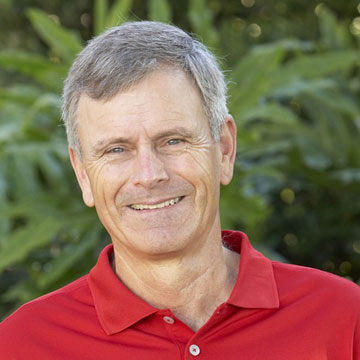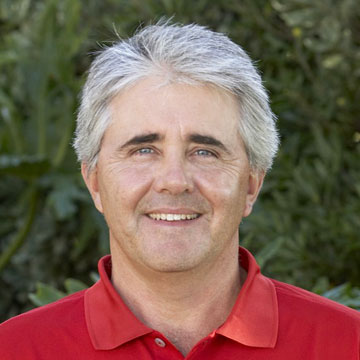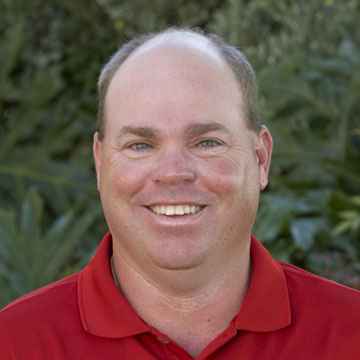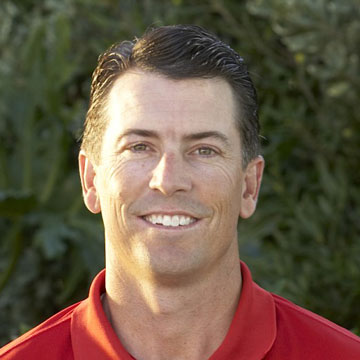

Kip Puterbaugh
I have been very fortunate to be surrounded with some of the top people
in the golf industry from a very early age. At 10 years old, my first
instructor was the legendary two-time PGA Champion Paul Runyan. He was
a great role model and inspirational in my desire to play and become involved
with the great game of golf. I was also very fortunate that former US
Open Champion Gene Littler befriended me and allowed me to play and practice
with him many times during my developmental years.
All my preliminary efforts to learn about the golf swing were based on
making me a better player. After graduating from the University of Houston
on a golf scholarship in 1970, I competed nationally and abroad, then
went into the golf business in 1972.
I was fortunate to work with one of the most respected golf professionals
in the industry, Mr. Bill Ogden of the North Shore Country Club in the
Chicago area. I have always enjoyed the study of the golf swing and as
I progressed in the golf business, my focus shifted more and more into
teaching. This culminated in opening my first golf school in Pala Mesa
in 1987, then moving that school in 1991 to start the Aviara Golf Academy.
Here at the Aviara Golf Academy we have designed a state of the art teaching
facility to help us expedite the learning experience of players of all
skill levels. We have the latest in computer and video setup available
to help give instant feedback to our students, to help them learn the
proper feels necessary to accomplish a fundamentally sound motion.
I have been priviledged to work with PGA Tour members Scott Simpson, Dennis
Paulson, Larry Mize and Loren Roberts. LPGA Tour member Jenna Daniels
has also worked with me for the past four years, and I have also worked
with LPGA Tour player Natalie Gulbis. Working with top-flight players
has only strengthened my teaching as they can relate valuable experiences
and tournament thoughts that can help us with the mental and competitive
aspects of the game.
I have trained a teaching staff that has remained a constant strong force
in our program. They all have a minimum of 5 years experience with me
and for our alumni they find it comforting to work with the same staff
on their return trips. Our staff offers continuity not available at most
golf schools.
My staff and I are committed to keeping current with the latest in golf
instruction and technology in order to offer you the best golf school
experience possible.
Ken Green
I was born and raised in the suburbs of Chicago. I've
played golf since I can remember(age 7), along with just
about every other sport. Almost all of my amateur golf
was played in Illinois. My high school team reached the
State finals three consecutive years as I played as the
#1 man on the team. We also won our league title those
three years. I won several junior tournaments in Illinois,
including the Illinois State Junior Match Play Championship.
After attending San Diego State, I turned professional
and played for 6 1/2 years mostly in Southern Cal. After
traveling to Australia to qualify for the Australasian
Tour, I decided full time travel was not for me. I decided
to seek employment to be able to spend time with my wife
and family, instead of chasing the little white ball around
the world.
I was fortunate to be hired at the Aviara Golf Academy
by Kip Puterbaugh in the Spring of 1993. I've been teaching
here since that time. I love teaching and working with
all the different people I've met from around the world.
I have a real desire for people to improve their golf
game, and, more importantly, to improve their enjoyment
of the game. After all, for most people, golf is a leisure
activity and is supposed to be fun. Even the most serious
and experienced players are reminded why they play this
silly game.
Outside of golf, I coach many different youth sports,
with baseball and basketball being the primary focus.
I use my knowledge of the physical motion of the golf
swing to enhance the motion of other sports. I also use
the psychology of golf to improve concentration, focus,
and fun. It's pretty neat when you see the light bulb
go on for some child. You know you've taught them something
they'll remember for a long time. I get that same enjoyment
out of teaching golf to all skill levels. It's very satisfying
to know you've helped somebody.
In the future, I'm hoping to play some tournament golf
again. I'm also planning to guide some golf trips to world
wide golf destinations. And, of course, I'll continue
teaching golf for as long as I can.
A Tip from Ken
When playing from a fairway bunker, unlike a greenside
bunker, you want to strike the ball before the sand. By
making a few adjustments at address, you can make better
contact with the ball. First, dig your feet, toes first,
into the sand to create a solid base and avoid slipping.
Second, grip down on the club to compensate for the depth
of your feet and to keep from hitting the sand before
the ball. Third, move the ball slightly (an inch or so)
back in your stance. Always be sure the club you choose
will comfortably clear any lip in the bunker. You can
even use a fairway wood if the situation allows. Keep
your lower body stable on the backswing, and make a good
shift through to the target. With these set up adjustments
and some practice, hopefully, fairway bunkers won't seem
so intimidating.
Grant Halverson
Grant has been playing golf for over 30 years. He started
playing golf under the guidance of his father Jack who
is a lifetime member of the PGA. He had a successful junior
career winning many local and national junior tournaments.
At fourteen he qualified for the National Insurance Youth
Classic Tournament and Made the Cut. He also qualified
for the 1986 US Junior Amateur at Murifield Village Golf
Club where he made it to the final eight of match play.
In high school he was conference, regional, and sectional
champion on 3 different occasions. He led his high school
team to two State of Illinois State championships. His
success in high school led him to receiving a golf scholarship
to the University of Georgia. While at Georgia, he competed
with current PGA Tour professionals Tommy Tolles, Franklin
Langham, Paul Claxton, Matt Peterson and current Furman
University golf coach Todd Satterfield. Upon completion
at Georgia, he received a Bachelor of Arts degree in history
in 1991.
After college, he successfully competed on the Teardrop
Golf Tour where he finished seventh on the year-end money
list. That finish propelled him to try to qualify for
the European PGA Tour. He competed on the European PGA
Tour, the European Challenge Tour, and the South African
PGA Tour from 1991-1994. Although he did not win overseas,
he did have a successful playing career and enjoyed many
high finishes. He played with and competed against Ernie
Els, Colin Mongomerie, Seve Ballesteros, Nick Price, Nick
Faldo, Denis Watson, David Frost, and Retief Goosen to
name a few.
When he finished his playing career, he developed a
passion for teaching golf. He has taught with a number
of the world's greatest instructors including Dr. Jim
Suttie, Peggy Kirk Bell, and David Leadbetter. Before
joining the staff at the Aviara Golf Academy, he taught
at the Bayonet and Black Horse Golf Courses in Monterey,
California.
At the Aviara Golf Academy, he has enjoyed working with
the staff and has developed his teaching even further
while working for and with Kip Puterbaugh. He became a
full time member at the academy in 1999. While working
at the academy, he has taught students of all skill levels
in schools and private lessons. In fact, he has one student,
Sarah Salvo, who is a 12 year old girl that is currently
going to play in the final stage of the US Women's Open
qualifying. She finished 5th at the first stage of qualifying
beating many of the country's best amateurs and professionals.
Grant's biggest thrill in golf now is helping people
overcome their swing flaws and making them enjoy the game
even more.
Grant’s Master Instructor Tip
To hit your drives higher and farther follow these few
tips and don't be afraid to let it rip: First, tee the
ball up high. Second, let your head and your spine tilt
to the right more and feel like you tuck your hips slightly
more forward (or underneath you). Third, swing the club
away low and slow and try to keep your right arm as wide
from your body as possible. Fourth, let the club settle
or pause slightly at the top. This will allow the body
to start the forward swing. Fifth, swing the club out
through the ball and into the fullest possible finish
position that you can. Do not try to hit the ball, just
let the ball get in the way of your swing. Finally, let
the club rip. It is ok to have a little reckless abandon.
Bob Knee
Bob has been teaching for Kip at the AGA since 1995. He graduated from UCSD in '91 and was an All American for the UCSD Golf Team. Bob currently is working with 2011 Women's US Open Champion So Yeon Ryu, the 2012 Korean National Team, PGA Tour player and 2004 Ryder Cup player Chris Riley. He also works with 2011 NCAA Women's Championship Team UCLA player Ani Gulugian, as well as college players at Northwestern, UOP, LMU, William and Mary, Cal to mention a few. Bob has a passion for the game and is a master instructor in the areas of full swing, short game and strong with the mental side of golf. As a player, Bob competed on the Golden State and Canadian Tours, played in the PGA Buick Invitational, and won the city Championships in Coronado and Costa Mesa. Bob still competes and was a member of the 2011 Century Club Team for the San Diego Chapter of the PGA. Bob has been a member of the PGA since 2002.
Low Scores Are a Chip Away, by Bob Knee
I have been teaching and playing golf for the past twenty-five
years and every player I have come across wants lower
scores. The short game is 60% of your total score and
I still see too many people spending too much practice
time on their full swing. Becoming a good chipper is one
way to lower your scores quickly.
A chip is a shot that typically happens close to the
green. A player will use a one-lever, putting style motion
to chip. You can use a variety of clubs (6iron to SW)
to chip depending on the amount of roll you want the ball
to have in a particular situation. The old saying of minimize
the air time and maximize the time the ball spends on
the ground is a great strategy to use.
There are multiple chipping styles but they tend to
have the same key fundamentals involved. To chip well
a player needs to have 70% or more of their weight on
their front foot.(left foot for the right-handed player)
The weight should be on the left foot at address by moving
you chest and upper body slightly forward, which helps
to keep your shoulders more level. This also helps to
put the bottom of your swing arc to the target side of
the ball, a necessity for solid contact. The ball needs
to be positioned on the inside of your right (back) foot.
The shaft of the club will be forward of the clubhead
at address and should stay that way throughout the motion.
A lot of great players prefer to use their putting grip
to chip which allows for a softer roll of the ball. You
should try both your regular full swing grip and putting
grip to see which suits you best.
Whenever you are hitting short game shots distance control
is very important. One way to become more proficient with
distance is to practice with 2 or 3 clubs ( 7iron, 9iron,
SW), pick a landing area on the green, and use these clubs
to understand the difference in the distance of roll of
the ball with each club. Another good drill for chipping
to avoid the problem of scooping or lifting the ball is
to place a towel 3-4 inches behind the ball and to hit
shots without striking the towel. This will help to create
a slight descending blow and the club will bottom out
in front of the ball for more solid contact.
Use these drills and techniques and you too can chip
your way to lower scores.
A Practice Tip
Golfers tend to find that it is difficult to play on
uneven lies on the course because on the range players
do not experience the same situation. To negotiate uneven
lies you need to remember a couple of key ingredients;
Try to match your hips and shoulders with the slope (i.e.,
parallel to the ground), maintain good posture and allow
your weight to travel towards the target. If the ball
is above your feet for the right handed golfer the ball
will travel right to left and vice versa for when the
ball is below your feet. The trajectory of the ball will
go higher for uphill and lower for down hill lies. Have
fun and play well.
Bruce Nakamura
UPDATE: Bruce Nakamura came in 3rd place in the 2013 TaylorMade National Championship, shooting 71-73 at Spyglass Hills and Pebble Beach in very tough conditions. He was competing against 50 of the top TaylorMade staff players throughout the
country.
Bruce started golfing at the age of 10 and quickly developed
a passion for the sport. In high school he was the league
champion. He went to college at the University of California
at San Diego where he graduated with a degree in Management
Science and Philosophy and Psychology minors. Bruce played
on the UCSD golf team where he was number one for four
straight years and was a Division III All-American three
years in a row.
After college he played the mini-tours, winning several
events on the Golden State Tour and after two unsuccessful
attempts at the PGA Tour Qualifying School, he chose to
continue his golf career as a teaching professional. In
1990 he was hired by the San Diego Golf Academy to become
the Director of Instruction for the AGT Program. He worked
there until 1995, when he was hired by the Aviara Golf
Academy.
Bruce still likes to play a little competitive golf.
In 1999 he played number one on the First Assistants North-South
Match where he went undefeated. It is a Ryder Cup version
of Northern California versus Southern California. He
has won several club pro events, the biggest being the
San Diego Stroke Play Championship in 2001.
Bruce Nakamura is also a Class A PGA pro and was ranked
by Golf Digest as the 12th best instructor in California
for 2003-2004, 9th in 2005-2006 and 18th in 2007-2008. He came in 2nd place in the SCPGA
Section Championship, 1st place in 2009 San Diego PGA Match Play
Championship, and in 2011 will be playing in the National Club Pro
Championship in Hershey PA
A Tip from Bruce
Good distance control is a major problem for most golfers
around the greens. A big problem we see with the average
golfer is that they do not look at the target and visualize
the shot. When chipping and putting try taking your practice
stroke looking at your target, then step up and hit the
chip or putt. This will give you a better feel for the
distance and you will be able to save valuable strokes.
Wayne Searle
To book call (760) 815-0972
Wayne was a top player for the San Diego State Golf team.
Along with playing in NCAA tournaments and Mini Tour events,
Wayne has won the San Diego City Tournament and also held
the title as the All Marine Corps Champion. He owned and
was Head Professional of the Surf and Turf Golfing Center
for 15 years. Wayne has been teaching with Kip Puterbaugh
at the Aviara Golf Academy since 1991. He is currently
the founder of the Aviara Golf Academy Custom Practice
Centers.
A Tip from Wayne
Stop Casting & Start Lagging
I see a lot of casting of the club from the top of the
swing. Not an easy habit to break. Most casters don't
set the club on the back-swing, resulting in an instant
throw down from the top.
One possible solution: On the back-swing, let
the right elbow fold early, presetting the club. Don't
confuse tucking the right elbow with letting it fold early
on the back-swing. The right elbow can fold early with
your arms extending away from the body as you turn.
Jason Puterbaugh
Jason has been played golf since the age of 5. He began playing under the tutelage of his father, Kip Puterbaugh. Kip's love and passion for golf and the golf swing drew Jason to the sport as he began to progress through the junior golf ranks. A four year Varsity member of his High School golf team that advanced to the State finals 3 out of of four years and finished 2nd, 3rd, 2nd each year.. He played four years of Division I golf at San Diego State, graduating in 2007 with a degree in Business Management. He has worked with Jay Brunza, the psychologist who helped Tiger develop mentally during his youth, and integrates psychology and mechanics into his instruction. He helped run a Jr. Golf program in Spain after graduating college and has been teaching at Aviara for two years.